

PRODUCT ENVIRONMENTAL FOOTPRINT TRAININGS


 A series of three trainings became the logical continuation of the online information event as of October 20, 2022 (“Product Environmental Footprint (PEF) and its benefits for manufacturing enterprises”). The trainings were united not only by the generic title “Deep dive into PEF”, but also by the core topic – all of them were focused on studying the methodologies of product environmental footprint assessment and product life cycle analysis. Each three-hour training had its own title and covered a certain amount of quite complex and somewhat new material for Ukrainian specialists. All trainings were held online on the Zoom platform.
Ms. An De Schryver, UNIDO International Expert, Senior Expert at PRé Sustainability was the trainer and Volodymyr Popovych, Regional RECP Centre’s Coordinator in West region was the moderator of all three trainings.
 At the first training “General Introduction General introduction into PEF and LCA” (03.11.2022), the participants got acquainted with the technical features of the LCA methodology, the purpose and objectives of the LCA study; LCA basic concepts, its meaning and ISO standards; principles and certain rules of product environmental footprint categories (PEFCRs). The trainer demonstrated a number of useful practical examples, in particular, LCA for incandescent, fluorescent and LED lamps (comparison based on the watts consumed, the lumens emitted and the shelf life); PEFCR for batteries and accumulators, dairy products, IT equipment, thermal insulation, PV power generation, etc. At this training a lot of attention was paid to the “Single Market for Green Products” Initiative, approved in 2013. Finally, the trainer gave advice on how to start a PEF study – and this is primarily the identification of the right quidance document to follow (PEFCR) or the use of the latest PEF method.
 The second training “Deep dive into PEF – Focus on data” (08.11.2022) mainly discussed how to collect data for a PEF study, what kind of data are these (primary, specific, measured or calculated directly at a specific facility, secondary/average data, databases), how to learn modelling waste recycling, etc. The training offered a lot of practical examples on PEF assessment for breweries, IT equipment, water pipes, etc. The formula for determining the circular environmental footprint was also presented, since in PEF assessment of the end-of-life stage and any waste arising at other stages of the life cycle should be modelled using this formula.
 The third training “Deep dive into PEF – Focus on results” (09.11.2022) summarized the knowledge gained during the previous two trainings and paid more attention to the PEF analysis results. Thus, the participants learned how to perform hot spot analysis, verification and reporting, assess the life cycle impact of a product/service and generally better understand processes related to green products and principles in Ukraine and to focus on the potential to implement the SMGP/PEF methodology in the country.
All trainings were accompanied by Q&R sessions, during which the participants used the opportunity to ask or clarify important points.
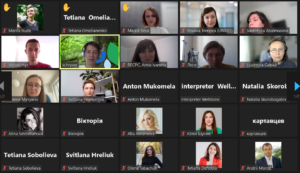 The training gathered experts and researchers working on issues related to green economy, circular economy, resource efficient and cleaner production, and environmental protection from central and local authorities, enterprises, expert organizations, business associations, NGOs, educational and research institutions.
The trainings were organized by the RECP Centre in Ukraine in collaboration with PRé Sustainability (Climate Neutral Enterprise).
35 applicants (27 females and 8 males) were selected to participate in 3 PEF trainingsbased on the results of the completed forms, among which 3 experts will be subsequently involved to conduct PER assessments.
About EU4Environment
The trainings were organized within the framework of the EU-funded regional programme, “European Union for Environment” (EU4Environment – Green Economy) Action, which helps the Eastern Partnership countries preserve their natural capital and increase people’s environmental well-being by supporting environment-related action, demonstrating and unlocking opportunities for greener growth, and setting mechanisms to better manage environmental risks and impacts.
It is funded by the European Union and implemented by five Partner organisations – OECD, UNECE, UNEP, UNIDO, and the World Bank – over the 2019-2024 period, with a budget of EUR 20 million.
For more information, please click here.
