INDUSTRIAL SYMBIOSIS: WHERE ENVIRONMENT AND ECONOMY GO HAND IN HAND

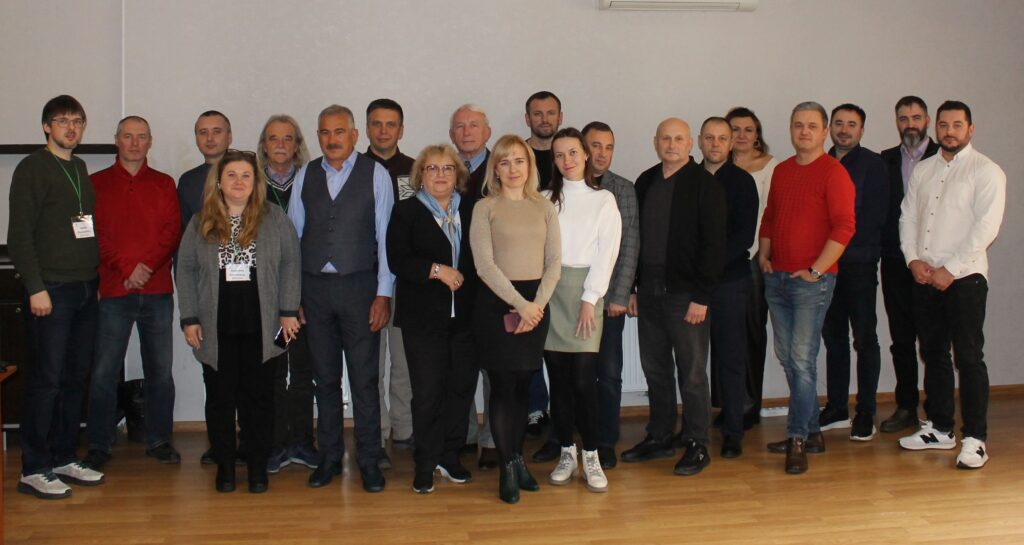
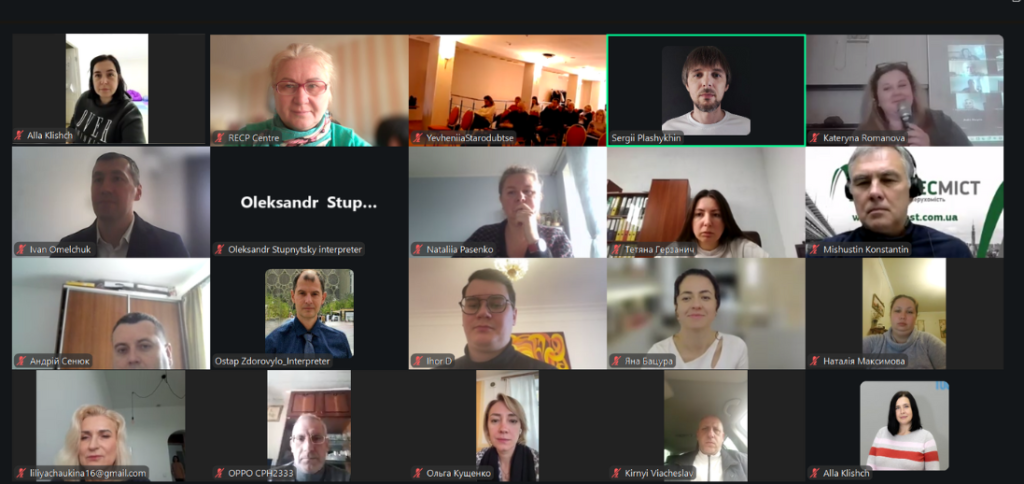
 On October 16, Lviv became a platform for discussing strategic changes in industry — hosting a seminar dedicated to the integration of the Eco-Industrial Parks (EIP) approach in Ukraine. Nearly 100 participants joined the hybrid event (online and offline), more than half of whom were women representing various sectors — industrial park managers, international experts, community representatives, and civil society organizations.
Participants learned about the concept of eco-industrial parks, their potential for environmental, social, and economic transformation, and the practical tools that help industrial parks transition to more sustainable models of operation.
Silvan Hungerbühler, Deputy Head of Cooperation at the Embassy of Switzerland in Ukraine, emphasized that the EIP model is highly relevant to the current Ukrainian context. According to him, eco-industrial parks are not only about sustainable development in peaceful times, but also about recovery, economic resilience, and long-term security during and after the war. He highlighted that EIPs foster the growth of innovative, technological, and environmentally responsible industries that can withstand difficult conditions; they create new jobs and help reduce socio-economic disparities; and by introducing environmental standards, they open access to international investments and supply chains. Switzerland, he added, supports Ukraine in this stage of recovery and strives to remain a reliable partner in the shared path toward sustainable development leadership.
César Barahona, UNIDO Chief Technical Advisor and GEIPP-II Project Coordinator in Ukraine, presented the project’s implementation roadmap and stressed that it is a key instrument for modernizing the industrial sector. He explained that the initiative aims not only at upgrading enterprises but also at raising awareness among authorities and the public about the potential of green transformation. He underlined that green development should become the foundation for industrial recovery after the war and highlighted the importance of training programmes focused on resource efficiency and cleaner production — as they help companies become both more sustainable and more competitive.
The Ukrainian perspective within the global programme was presented by Anton Kleshchov, National Coordinator of GEIPP-II Ukraine. He outlined the overall progress of the programme’s implementation, explained how EIP status is determined, what indicators are considered, and what benefits project participants can gain.
The technical segment of the seminar was led by experts from the Resource Efficient and Cleaner Production Centre — Kateryna Romanova, Serhii Plashykhin, Ivan Omelchuk, and Olexiy Tchaykovsky. They introduced participants to the methodology and tools that help industrial parks assess their compliance with international EIP criteria (version 2.0) and shared examples of successful park transformations from other countries.
In addition, participants received information on opportunities to join GEIPP-II Ukraine — including how to submit a Commitment Letter to become part of the transformation process.
The seminar in Lviv united professionals and practitioners around a shared goal — to make Ukrainian industry modern, competitive, and environmentally responsible. It is through such platforms that concrete solutions are born, paving the way for systemic change.
The seminar was organized within the framework of the project “Global Eco-Industrial Parks Programme – Phase II: Implementation at the National Level in Ukraine” (GEIPP-II Ukraine), implemented by the United Nations Industrial Development Organization (UNIDO) in cooperation with the Ministry of Economy, the Ministry of Environmental Protection and Natural Resources, and the Ministry of Agrarian Policy and Food of Ukraine, with financial support from the Government of Switzerland through the State Secretariat for Economic Affairs (SECO).